
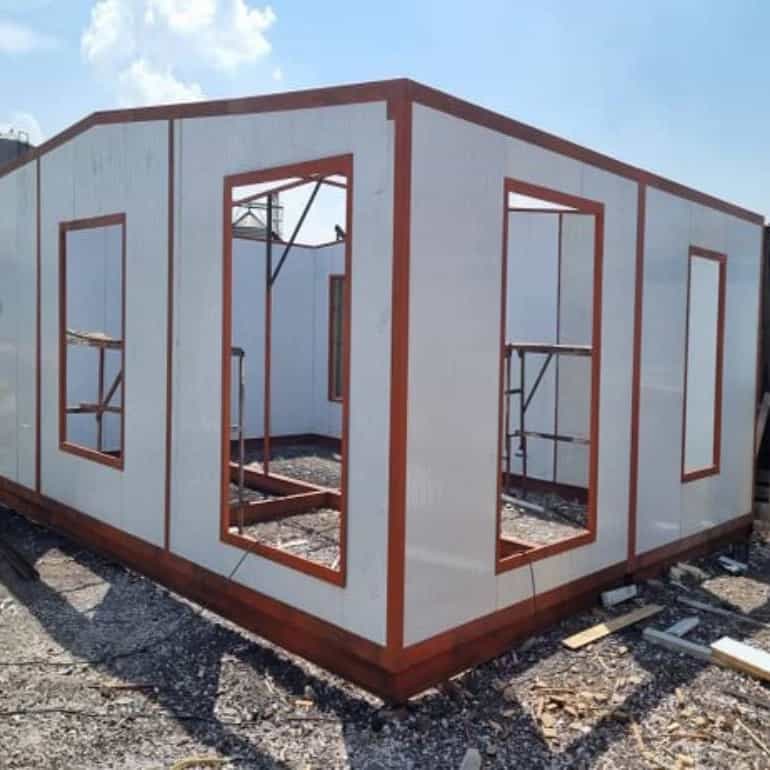
sandwich panel; The style core of the modern building industry
Abstract:
Sandwich panel is one of the most widely used prefabricated building materials, which is a suitable alternative to traditional walls and ceilings due to its multi-layer structure, light weight and high resistance. This article introduces the structure, types, advantages, production process and industrial applications of this system and examines its role in energy optimization and construction speed.
1. Definition and technical structure of sandwich panel
Sandwich panel consists of three layers:
- Outer sheet: usually galvanized, aluminum or aluzinc with color coating.
- Middle core: from insulating foam (polyurethane, polystyrene, stone wool or PIR).
- Inner sheet: similar to the outer sheet for the strength of the structure and the beauty of the space.
This structure makes the panel perform properly against moisture, sound, heat transfer and impact.
2. Types of sandwich panels based on application
- Wall panel: with male-female lock and suitable for sheds and external walls.
- Ceiling panel: with trapezoidal steps to drain rainwater.
- Refrigerating panel: with a very low heat transfer coefficient for storing food and medicine.
- Fireproof panel: with PIR or stone wool core for high thermal resistance.
3. Production process
Sandwich panel production is usually done in two ways:
- Continuous Line: by simultaneously injecting foam between two sheets and passing through the thermal furnace.
- Discontinuous: for small orders and special thicknesses.
In equipped factories, controlling the foam reaction temperature and press pressure increases the adhesion and final quality of the panel.
4. Benefits and functional features
- Low weight and ease of transportation and installation
- Suitable heat and sound insulation
- Resistance against corrosion and rust
- Ability to paint and variety in design
- Quick installation in large industrial and residential projects
5. Requirements and standards
In the design and production of sandwich panels, compliance with the following standards is mandatory:
- ISIRI 18688 (polyurethane insulating panels)
- EN 14509 (European standard for prefabricated metal panels)
- ASTM E84 (behavior against fire)
The correct implementation of sealing and flushing plays an important role in the durability and structural performance of the panel.
6. Economic analysis
In industrial projects, the use of sandwich panels reduces the cost of construction by 30-40% compared to traditional walls. In addition, the reduction of energy loss in the building leads to return of capital in the short term.
summary
Sandwich panel is a symbol of modern industrial architecture; A light, resistant and environmentally friendly product that has found a stable position both in the construction industry and in energy-oriented projects. Familiarity with the types and requirements of its production is an important step in the optimal design of new structures.
نظرات و تجربیات شما
دیدگاه شما چیست؟
با ثبت امتیاز خود، به ما در تولید محتوای بهتر کمک کنید.